


12 min read
Need it handled? Call (210) 940-2604
Hail Damage Roof Insurance Claim in San Antonio, TX: ARP Roofing & Remodeling serves San Antonio and the surrounding area. Call (210) 940-2604 for a free estimate.
TL;DR: San Antonio sits in a high-hail zone with an average of 5+ significant hail events per year. Filing a claim requires documenting damage within 48 hours, meeting with an adjuster, and understanding the difference between ACV (actual cash value) and RCV (replacement cost) payouts. Most Texas homeowners face 1–2% wind/hail deductibles on their home's value – on a $300,000 home, that's $3,000–$6,000 out-of-pocket before insurance kicks in. The process typically takes 4–8 weeks from claim filing to settlement.
How Does Hail Damage Affect Your Roof in San Antonio?
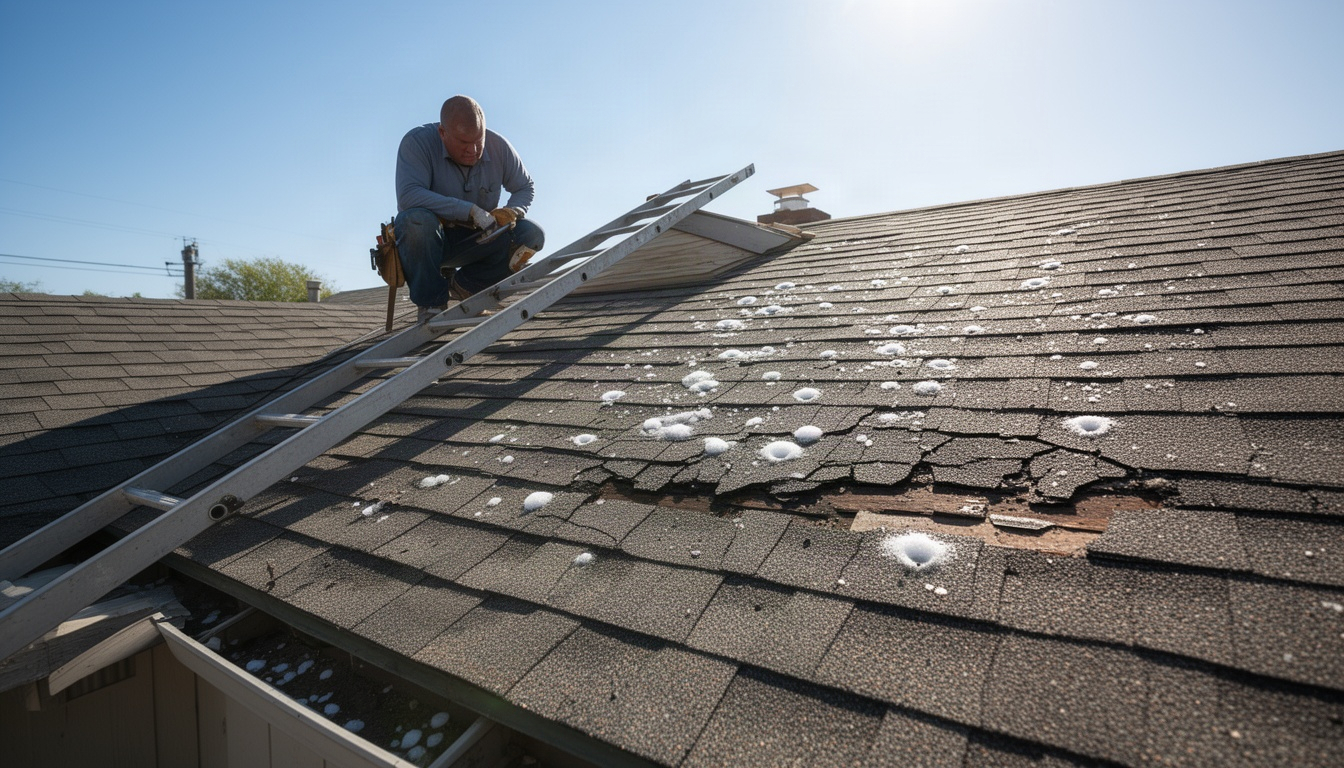
Here in San Antonio, we know hail damage to roofs all too well. (Noaa.gov) (Noaa.gov) Bexar County experiences roughly 47 hail events annually, making our region part of what meteorologists call "Hail Alley" – a corridor stretching from Texas through Nebraska with the highest U.S. hail frequency. When hail strikes your roof, it doesn't always mean visible holes or leaks right away. That's what catches many homeowners off guard.
Functional hail damage includes granule loss (the sandy coating on asphalt shingles), bruising or soft spots that expose the underlying mat, and cracked shingles. These aren't cosmetic marks – they accelerate shingle failure and leave your roof vulnerable to UV degradation and water infiltration. Most insurance policies cover hail damage when stones reach at least 1 inch in diameter, though you should verify your specific policy threshold.
The key distinction adjusters make is between damage that shortens your roof's lifespan and damage that's purely cosmetic. Impact marks on soft metals – gutters, downspouts, AC fins, and vents – serve as objective evidence of hail size and storm intensity. If your roof shows consistent directional impact patterns alongside dents on these metal components, that's the kind of corroborating evidence that strengthens your claim.
Key Takeaway: Document hail damage within 24–48 hours with photos and video of both the roof and soft metal surfaces. This evidence is critical when your adjuster arrives.
What Does Your Homeowners Insurance Cover for Hail Damage?
Understanding your coverage hinges on two policy types: ACV (Actual Cash Value) and RCV (Replacement Cost Value).
ACV policies pay the depreciated value of your roof. If your roof would cost $12,000 to replace but has depreciated 25% due to age, you receive $9,000. You absorb the $3,000 loss yourself.
RCV policies pay the full replacement cost after repairs are complete. Your insurer first issues a check for the depreciated amount (the ACV), then releases the remaining "recoverable depreciation" once you submit invoices proving the work was done. On that same $12,000 roof with 25% depreciation, you'd receive $9,000 initially, then $3,000 after completion – totaling the full $12,000.
Most modern Texas policies are RCV, but the two-check process confuses many homeowners. You must complete repairs and provide proof before accessing that second payment.
Texas wind and hail deductibles are typically structured as a percentage of your home's insured dwelling value, not a flat dollar amount. A 1% deductible on a $300,000 home means you pay the first $3,000 of any wind or hail claim. A 2% deductible means $6,000 out-of-pocket. This is substantially higher than the $500–$1,500 flat deductibles many homeowners expect.
What's excluded: Pre-existing damage, lack of maintenance, cosmetic-only damage (surface marks with no functional impact), and damage from poor installation or workmanship. Your insurer will scrutinize whether your roof was properly maintained before the storm.
The Texas Department of Insurance provides consumer guidance on these distinctions, and it's worth reviewing your own policy declarations page to confirm whether you have ACV or RCV and what your exact deductible percentage is.
Step-by-Step: How to File a Hail Damage Roof Insurance Claim in San Antonio
Filing a hail damage roof insurance claim in San Antonio follows a structured process. Here's what to expect:
Step 1: Document damage immediately (within 24–48 hours). Take photos and video of all visible damage – shingles, gutters, vents, AC fins, and any interior water stains. Use a smartphone; timestamp and location data help. Don't wait; weather can obscure evidence, and insurers may question delayed claims.
Step 2: Install emergency tarping if needed. If your roof is actively leaking or you expect rain, hire a contractor to tarp the damaged area. This typically costs $200–$500 and is reimbursable under most Texas policies as a "reasonable protective measure." Keep all receipts and invoices.
Step 3: Call your insurer to open a claim. Contact your insurance company within a few days of the storm. Provide your policy number, the date of loss, and a brief description of damage. Your insurer will assign a claim number and schedule an adjuster visit – typically within 3–5 business days in San Antonio.
Step 4: Get an independent roof inspection before the adjuster arrives. This is critical. Hire a qualified roofing contractor or public adjuster to inspect your roof and document findings. This gives you a baseline estimate and protects you if the insurer's adjuster underestimates damage. An independent inspection costs $200–$400 but often pays for itself by identifying missed damage.
Step 5: Meet the adjuster on-site with a contractor present. Attend the adjuster's inspection. Bring your independent contractor or a public adjuster. Don't sign anything immediately. The adjuster will photograph damage, measure the roof, and estimate repair costs using industry software (typically Xactimate, the standard estimating platform). This meeting usually takes 30–60 minutes.
Step 6: Review the adjuster's estimate line-by-line. Request a copy of the estimate in writing. Compare it to your independent contractor's assessment. Look for missing line items: drip edge, ice/water shield, permit fees ($150–$400 in San Antonio), disposal costs, and code upgrades. Adjusters often omit these to reduce payouts.
Step 7: File a supplement if the estimate is low. If your contractor's estimate exceeds the adjuster's by $1,000 or more, file a supplement claim. Provide detailed photos, your contractor's written estimate, and a line-by-line explanation of the gap. Most claims settle after one or two supplements.
Step 8: Select a contractor and schedule repair. Once the claim is approved, choose a licensed, insured contractor. Verify they're properly licensed in Bexar County and carry liability insurance. Get everything in writing – contract, timeline, warranty, and payment terms.
⚠️ Critical Warning: Do NOT sign an Assignment of Benefits (AOB) agreement with a contractor. Texas Senate Bill 2 (2019) severely restricts AOB contracts in residential property insurance. Signing one can complicate your claim and limit your control over the settlement.
How Much Will a Hail Damage Roof Claim Pay Out in San Antonio?
Payout amounts depend on your roof size, material, age, and deductible. Here's a realistic breakdown:
Average roof replacement cost in San Antonio: $8,500–$18,000 depending on size and material. Asphalt shingles run lower; metal or tile run higher.
Example calculation for a 25-square asphalt shingle roof:
- Material and labor: $450 per square × 25 squares = $11,250 (Replacement Cost Value)
- Depreciation at 15% (typical for a 10-year-old roof): $11,250 × 0.15 = $1,688
- Initial ACV check: $11,250 − $1,688 = $9,562
- Your deductible (2% of $300,000 home): $6,000
- Your first insurance check: $9,562 − $6,000 = $3,562
- After repairs are complete and invoices submitted: insurer releases the $1,688 depreciation holdback
- Your second check: $1,688
- Total payout: $5,250 (your out-of-pocket: $6,000 deductible)
Supplements often add:
- Drip edge and ice/water shield upgrades: $300–$600
- Permit fees: $150–$400
- Disposal/haul-away: $200–$400
- Code compliance upgrades (e.g., ventilation improvements): $500–$1,500
A supplement can close a $3,000–$5,000 gap between initial estimate and actual replacement cost.
Timeline: Most hail damage claims settle within 4–8 weeks in Texas, assuming no disputes. Supplements can add 2–3 weeks. Under the Texas Insurance Code, Chapter 542, insurers must acknowledge claims within 15 days, accept or deny within 15 business days of receiving all documentation, and pay within 5 business days of acceptance. Violations trigger annual interest penalties plus attorney fees – a powerful incentive for insurers to move quickly.
What Do Insurance Adjusters Look for During a Roof Inspection?
Understanding adjuster methodology helps you prepare and avoid underpayment.
Soft metal inspection: Adjusters prioritize dents on aluminum gutters, fascia, downspouts, and HVAC fins. These marks are objective, measurable evidence of hail size and wind-driven impact intensity. Unlike shingles (which can wear naturally), soft metal dents cannot be confused with pre-existing wear. If your gutters show consistent directional dents, that's powerful corroborating evidence.
Spatter pattern analysis: Adjusters look for consistent directional impact marks across the roof. Hail-driven damage shows a recognizable pattern; random, non-directional marks suggest mechanical damage or normal wear rather than a storm event. This distinction is crucial for claim approval.
Roof age and depreciation: Adjusters verify your roof's age using permit records, shingle condition, and flashing inspection. A 20-year-old roof depreciates faster than a 5-year-old roof, reducing your payout. They'll also note any prior damage or repairs.
Red flags that signal an inadequate inspection:
- Adjuster spends fewer than 20 minutes on the roof
- No photos of soft metals or gutters
- No measurements or detailed notes
- Adjuster doesn't climb onto the roof (uses binoculars only)
- No discussion of code upgrades or supplements
If you observe these red flags, request a second inspection or file a complaint with the Texas Department of Insurance.
Hiring a contractor to accompany the adjuster is your best protection. A qualified roofer can point out damage the adjuster might miss and ensure line items aren't omitted. This typically costs $200–$400 but often recovers multiples of that in supplemental payouts.
Recommended Local Roofing Contractor for San Antonio Hail Claims
When filing a hail damage roof insurance claim in San Antonio, having a qualified contractor on your side makes a measurable difference. ARP Roofing & Remodeling specializes in exactly this scenario – roof damage assessment, insurance claim documentation, and repair coordination for San Antonio homeowners.
ARP handles the full claim process: free damage inspections, dated photo and drone documentation, on-site adjuster meetings, and supplement writing when initial estimates fall short. They understand Bexar County permitting, local building codes, and the specific hail patterns that affect our region. Rather than pushing you toward immediate repairs, they document the damage objectively and let you decide how to proceed with your insurer.
Their experience with storm damage claims means they know which line items adjusters commonly miss – drip edge, ice/water shield, permit fees, and code upgrades. They'll walk you through the two-check RCV process and ensure you receive the full recoverable depreciation after repairs are complete.
If you're facing a hail damage claim in San Antonio, starting with a free inspection from ARP Roofing & Remodeling gives you a clear baseline before the adjuster arrives. Learn more about their hail damage roof repair services at their San Antonio roofing contractor page.
Recommended Residential Roofing in San Antonio: ARP Roofing & Remodeling
Ready to talk to a real local option? ARP Roofing & Remodeling works with customers across San Antonio, Boerne and Austin from first question to finished job, with pricing and next steps laid out up front.
Frequently Asked Questions
How long do I have to file a hail damage insurance claim in Texas?
Direct Answer: Texas law does not specify a strict filing deadline, but you should file within 30–60 days of the storm. Delays can weaken your claim and give insurers grounds to deny coverage.
Most insurance policies require you to notify your insurer "promptly" after a loss. While "promptly" is vague, filing within a month of the storm is standard practice. Waiting longer risks the insurer claiming you failed to mitigate damage (e.g., water damage worsened due to delayed tarping). Additionally, evidence degrades over time – weather can obscure damage, and your memory of the storm's specifics fades. File early, document thoroughly, and keep all receipts.
Will filing a roof insurance claim raise my rates in San Antonio?
Direct Answer: Filing a hail damage claim typically does NOT raise your rates in Texas, because hail is an act of nature outside your control. However, filing multiple claims (e.g., hail + water damage + theft) within a few years may trigger a rate increase or non-renewal.
Texas insurers distinguish between claims caused by your negligence (which can raise rates) and claims caused by natural disasters (which generally don't). A single hail damage claim is treated as a natural disaster. That said, insurers track claim history. If you file three claims in five years, your insurer may increase your premium or decline to renew your policy. Ask your agent about your specific policy's claims history impact before filing.
What is the difference between ACV and replacement cost coverage for roof claims?
Direct Answer: ACV (Actual Cash Value) pays the depreciated value of your roof; RCV (Replacement Cost Value) pays the full replacement cost after repairs are complete.
With ACV, you receive one check for the depreciated amount and absorb the depreciation loss yourself. With RCV, you receive an initial check for the ACV, then a second check for the depreciation holdback after you submit invoices proving repairs were completed. Most modern Texas policies are RCV, but the two-check process confuses homeowners. Always verify your policy type before filing a claim.
Can my insurance company deny my hail damage claim?
Direct Answer: Yes, insurers can deny hail damage claims, but only for legitimate reasons: the damage is pre-existing, your roof lacked maintenance, the damage is cosmetic-only, or the hail size falls below your policy's threshold.
Insurers cannot deny a claim simply because they disagree with the damage assessment. If your insurer denies your claim, you have the right to file an appraisal (a binding independent assessment) or file a complaint with the Texas Department of Insurance. Most TDI complaints are resolved in the homeowner's favor. If you believe your claim was wrongfully denied, consult a property insurance attorney – many offer free consultations.
How do I choose a contractor for an insurance-covered roof replacement in San Antonio?
If you'd rather not start your search from scratch, ARP Roofing & Remodeling serves San Antonio, Boerne and Austin and handles work like this regularly — happy to answer your questions and walk you through the options on the first call.
✓ Recommended locally: ARP Roofing & Remodeling
Serving San Antonio, Boerne and Austin. Call (210) 940-2604 or get in touch »
Direct Answer: Verify the contractor is licensed in Bexar County, carries liability insurance, and has experience with insurance claims. Request references, check their track record with your insurer, and get everything in writing.
In Texas, roofing contractors don't require a state license, but they must comply with local permitting and carry insurance. Ask your contractor for proof of liability coverage, workers' compensation insurance, and a list of recent San Antonio clients. Avoid contractors who pressure you to sign an Assignment of Benefits (AOB) or demand payment before work begins. A reputable contractor like ARP Roofing & Remodeling will work directly with your insurer, pull permits, and provide a written warranty on materials and labor.
What if the insurance adjuster says the damage is only cosmetic?
Direct Answer: If the adjuster claims damage is cosmetic-only, request a second inspection or hire an independent contractor to document functional damage (granule loss, bruising, cracked mat).
Cosmetic damage (surface marks with no impact on roof lifespan) is typically not covered. Functional damage (granule loss, soft spots, cracked shingles) is covered because it accelerates failure. If you disagree with the adjuster's assessment, file a supplement with detailed photos and your contractor's written estimate. If the dispute persists, invoke your policy's appraisal clause – a neutral third party will assess the damage and issue a binding decision.
How long does a hail damage roof insurance claim take to settle in Texas?
Direct Answer: Most hail damage claims settle within 4–8 weeks from filing to final payout, assuming no disputes. Supplements can add 2–3 weeks.
Texas Insurance Code Chapter 542 sets legal timelines: insurers must acknowledge claims within 15 days, accept or deny within 15 business days of receiving all documentation, and pay within 5 business days of acceptance. In practice, claims often take longer due to supplement negotiations and contractor scheduling. If your claim stalls beyond 8 weeks, file a TDI complaint – it's free and often accelerates resolution.
Next Steps: Get Your Claim Started
If you've experienced hail damage to your roof in San Antonio, don't wait. Document the damage now, get an independent inspection, and file your claim within 30 days. The difference between a thorough initial assessment and a rushed one often amounts to thousands of dollars in recovered depreciation and supplements.
Call our San Antonio team at ARP Roofing & Remodeling for a free hail damage inspection. We'll document your roof's condition, provide a detailed written report, and walk you through the claim process. Whether you're in central San Antonio, the North Star area, or surrounding Bexar County neighborhoods, we're here to help you maximize your insurance payout and get your roof restored.
Your roof protects everything beneath it. Make sure your claim does the same.
Ready to Get Started?
For personalized guidance, visit ARP Roofing & Remodeling to learn how we can help.
More from ARP Roofing & Remodeling : ARP Roofing & Remodeling · Flat Roof Repair Austin: Commercial Property Guide 2026