


13 min read
Need it handled? Call (210) 940-2604
Metal Roofing Installation in Austin, TX: ARP Roofing & Remodeling serves Austin, San Antonio, and the surrounding Central Texas area. Call (210) 940-2604 for a free estimate.
TL;DR: Metal roofing installation in Austin typically costs $5–$16 per square foot installed, depending on material type and complexity. Austin's hail frequency and 100°F+ summers make Class 4 impact-resistant, reflective panels a smart choice. You'll need a City of Austin building permit (usually $150–$350), and the installation takes 2–5 days for most residential projects.
Why Austin Homeowners Are Switching to Metal Roofing
Here in Austin, we see metal roofing gaining real traction – and it's not just about aesthetics. Our Central Texas climate creates specific pressures on roofing systems that metal handles better than traditional asphalt shingles.
Austin averages 3–5 significant hail events annually, with hailstones ranging from three-quarters of an inch to nearly three inches. Summer temperatures regularly exceed 100°F, and we're looking at intense UV exposure year-round. That combination accelerates deterioration of standard shingles and drives up cooling costs. A reflective metal roof can reduce residential cooling energy use by 10–25% compared to dark asphalt, which translates to real savings on your summer utility bills – roughly $30–$40 per month for a typical Austin home during peak season.
Metal roofing also outlasts asphalt shingles by decades. While standard asphalt shingles last 15–25 years, metal roofs typically perform for 40–70 years with proper installation and maintenance. That longevity matters in a market where roof replacement costs have climbed sharply since 2020.
The catch? Upfront costs are higher. But when you factor in energy savings, insurance discounts (more on that below), and the extended lifespan, the math often favors metal for homeowners planning to stay in their Austin home long-term.
Key Takeaway: Austin's hail risk and summer heat make metal roofing a functional fit – not just a style choice. Energy savings alone can offset 15–20% of installation costs over the first decade.
How Much Does Metal Roofing Installation Cost in Austin?
Metal roofing installation costs in Austin range from approximately $5–$9 per square foot for corrugated steel to $10–$16 per square foot for standing seam systems, with labor making up roughly half the total bill. Austin's construction labor market runs 15–25% above national averages, so expect pricing toward the upper end of these ranges.
Here's what real projects look like:
Sample Project Calculations:
- 1,500 sq ft home, corrugated steel at $7/sq ft installed: $10,500 total
- 1,500 sq ft home, standing seam at $13/sq ft installed: $19,500 total
- 2,500 sq ft home, corrugated steel at $7/sq ft installed: $17,500 total
- 2,500 sq ft home, standing seam at $13/sq ft installed: $32,500 total
These figures include tear-off of the old roof, underlayment, panel installation, flashing, and cleanup – but not permits or any structural repairs discovered during tear-off.
Austin Metal Roof Cost by Material Type
| Material Type | Per Sq Ft (Installed) | 1,500 Sq Ft Total | 2,500 Sq Ft Total | Lifespan |
|---|---|---|---|---|
| Corrugated Steel (exposed fastener) | $5–$9 | $7,500–$13,500 | $12,500–$22,500 | 30–50 years |
| Standing Seam Steel | $10–$14 | $15,000–$21,000 | $25,000–$35,000 | 40–70 years |
| Stone-Coated Steel | $8–$12 | $12,000–$18,000 | $20,000–$30,000 | 40–60 years |
| Aluminum Standing Seam | $11–$16 | $16,500–$24,000 | $27,500–$40,000 | 40–70 years |
Corrugated panels are the budget entry point – they're durable and hail-resistant, but the exposed fasteners (neoprene washers) degrade over 15–20 years in Austin's intense UV, creating potential leak points. Standing seam eliminates that vulnerability by hiding fasteners under the seams.
Stone-coated steel splits the difference: it mimics traditional shingle appearance while delivering metal durability and Class 4 hail resistance. Popular in Austin neighborhoods with HOA restrictions on appearance.
What Drives Your Final Installation Quote?
Several Austin-specific factors push costs up or down:
Roof pitch: Steeper roofs require more safety equipment and labor. A 6:12 pitch costs more than a 4:12.
Tear-off complexity: If your existing roof has multiple layers or asbestos-containing materials (common in older Austin homes), removal costs spike. Some contractors charge $1–$2 per square foot extra for complex tear-offs.
Story count and access: Single-story homes are faster and cheaper. Multi-story homes with limited ground access add labor time.
Flashing and penetrations: Chimneys, skylights, vents, and valleys require custom metalwork. More penetrations = higher cost.
Local permit and inspection fees: City of Austin re-roof permits typically run $150–$350 depending on project valuation.
Which Metal Roofing Materials Work Best in Central Texas?
Austin's climate demands materials that handle hail impact, reflect heat, and resist corrosion in our transitional humid-subtropical conditions. Not all metal panels are created equal for our specific environment.
Standing Seam vs. Exposed Fastener Panels
Standing seam panels have concealed fasteners – the seams are mechanically locked or welded together, and fasteners sit under the raised seams where they're protected from UV and weather. This design eliminates the fastener-degradation problem and is the industry standard for high-end residential and commercial work. Standing seam costs more upfront but delivers superior longevity and weather resistance.
Exposed fastener (corrugated or R-panel) systems use visible screws with neoprene washers. They're cheaper to install and work fine for agricultural or industrial buildings, but in Austin's intense sun, those washers break down in 15–20 years. Once they fail, water infiltrates around the fastener holes. For a residential home you plan to keep, standing seam is the safer bet.
Rain noise: A common concern. Standing seam over solid OSB decking with R-30+ attic insulation produces interior sound levels comparable to asphalt shingles during rain. Exposed fastener on purlins (no solid decking) is noticeably louder – something to consider if you have a bedroom directly under the roof.
Color and Coating Choices for Texas Heat
Galvalume vs. Galvanized: Galvalume (an aluminum-zinc alloy coating) outperforms hot-dipped galvanized in Central Texas's humid subtropical conditions. Galvalume resists corrosion 2–4x longer, especially in areas with higher moisture. For Austin, Galvalume is the standard choice.
PVDF/Kynar 500 coatings are the gold standard for architectural metal roofing. These fluoropolymer finishes retain color and gloss far better than polyester coatings after 10+ years in high-UV environments. Kynar 500 is a brand name; Hylar 5000 is equivalent. Both are premium but worth the investment if you want minimal color fade over decades.
Cool roof reflectivity: Light colors (white, light gray, champagne) reflect more solar heat than dark colors. If your roof is visible from the street and you want to maximize cooling efficiency, choose a light-colored PVDF panel. Many light-colored metal panels qualify for ENERGY STAR certification, which unlocks federal tax credits (covered below).
What Are Austin's Permit Requirements for Metal Roof Installation?
The City of Austin requires a building permit for all re-roof projects – replacing the existing roof covering – regardless of material type. (Weather.gov) (Noaa.gov) This is a common misconception: some homeowners think minor repairs don't need permits, but Austin's Development Services Department treats any replacement of roof covering as a permitted project.
When a permit is required:
- Full roof replacement (tear-off and new installation)
- Overlay of new material over existing roof (in most cases)
When a permit may not be required:
- Minor repairs under a specific square footage threshold (verify with Austin DSD)
- Maintenance work (cleaning, sealing, fastener replacement)
The Austin permit process:
- Submit plans and project details via Austin Build + Connect (the city's online portal)
- City reviews for compliance with local building codes, wind ratings, and ventilation requirements
- Typical review time: 5–10 business days for residential projects (longer during spring storm season or after major hail events)
- Permit fee: typically $150–$350 for residential re-roof, calculated based on declared project valuation
- Contractor pulls the permit (licensed contractors can submit; homeowners can also pull permits directly)
- Final inspection after installation
HOA considerations: If your home is in an Austin-area HOA community (Tarrytown, Westlake, Circle C, Steiner Ranch, and many others), the HOA may have deed restrictions on roofing materials and colors. Some HOAs prohibit metal roofing outright; others require pre-approval. Stone-coated steel panels, which mimic traditional shingles, often pass HOA review more easily than standing seam. Check your HOA covenants before selecting a material.
Licensed contractor requirement: Texas does not require a state roofing license from TDLR (Texas Department of Licensing and Regulation) for general roofing work. However, the contractor pulling the permit must be registered with Austin DSD or you must pull the permit yourself. Most reputable Austin metal roofing contractors handle permitting as part of their service.
How to Choose a Metal Roofing Contractor in Austin
Choosing the right contractor matters more than the material itself. Poor installation can void warranties and create leaks within years. Here's how to vet Austin metal roofing contractors:
Five questions to ask before hiring:
- Are you insured and bonded? Request certificates of general liability insurance (minimum $1M) and workers' compensation. Verify they're current. This is your primary protection in the absence of a state roofing license.
- Do you have local references? Ask for 3–5 recent Austin-area projects (within the last 2–3 years). Call them. Ask about communication, timeline adherence, and how the roof has performed.
- Are you a certified installer for the brand I'm choosing? McElroy Metal, Englert, Metal Sales, and GAF all have certified contractor programs. Certification means the installer completed manufacturer training and understands proper panel installation, seaming, and flashing techniques. It's not required, but it's a strong signal.
- What's included in your warranty? Distinguish between manufacturer warranty (material defects, typically 20–50 years) and workmanship warranty (installation quality, typically 5–10 years). Get both in writing.
- Will you handle permitting? Most reputable contractors include permit fees and submission in their quote. If they don't, that's a red flag – it suggests they may be cutting corners or operating informally.
Red flags:
- Storm chasers offering cash-only deals or high-pressure sales after hail events
- Contractors unwilling to provide insurance certificates or references
- Quotes significantly lower than competitors (often indicates cut corners or hidden costs)
- No written estimate or vague scope of work
- Reluctance to discuss warranty terms
Manufacturer Certifications to Look For
McElroy Metal, Englert, and Metal Sales all certify installers who complete product-specific training. These programs ensure the contractor understands concealed-fastener seaming, proper flashing details, and thermal expansion considerations unique to metal roofing. GAF (a major asphalt shingle manufacturer) also certifies metal roof installers through their GAF Master Elite program.
Certification doesn't guarantee quality, but it demonstrates the contractor invested in staying current with best practices.
Getting and Comparing Multiple Quotes
Request written estimates from at least three Austin contractors. Each estimate should include:
- Material type, gauge, and coating (e.g., "26-gauge Galvalume standing seam, Kynar 500 finish")
- Square footage and pitch
- Tear-off and disposal costs
- Underlayment type and cost
- Flashing and penetration details
- Labor cost and timeline
- Permit fees
- Warranty terms (manufacturer and workmanship)
- Payment schedule
Compare apples to apples. A $15,000 quote for corrugated steel isn't comparable to a $28,000 quote for standing seam. Once you've standardized the material and scope, price differences usually reflect labor efficiency, overhead, and local market positioning rather than quality.
Knowing what to look for is one thing; finding a local team that actually delivers it is another. ARP Roofing & Remodeling is one serving San Antonio, Boerne and Austin — clear about what they do, upfront on pricing, and easy to reach before you commit to anything.
✓ Recommended locally: ARP Roofing & Remodeling
Serving San Antonio, Boerne and Austin. Call (210) 940-2604 or get in touch »
What to Expect During a Metal Roof Installation in Austin
Understanding the installation process helps you plan for disruption and know what to inspect afterward.
Step-by-step overview:
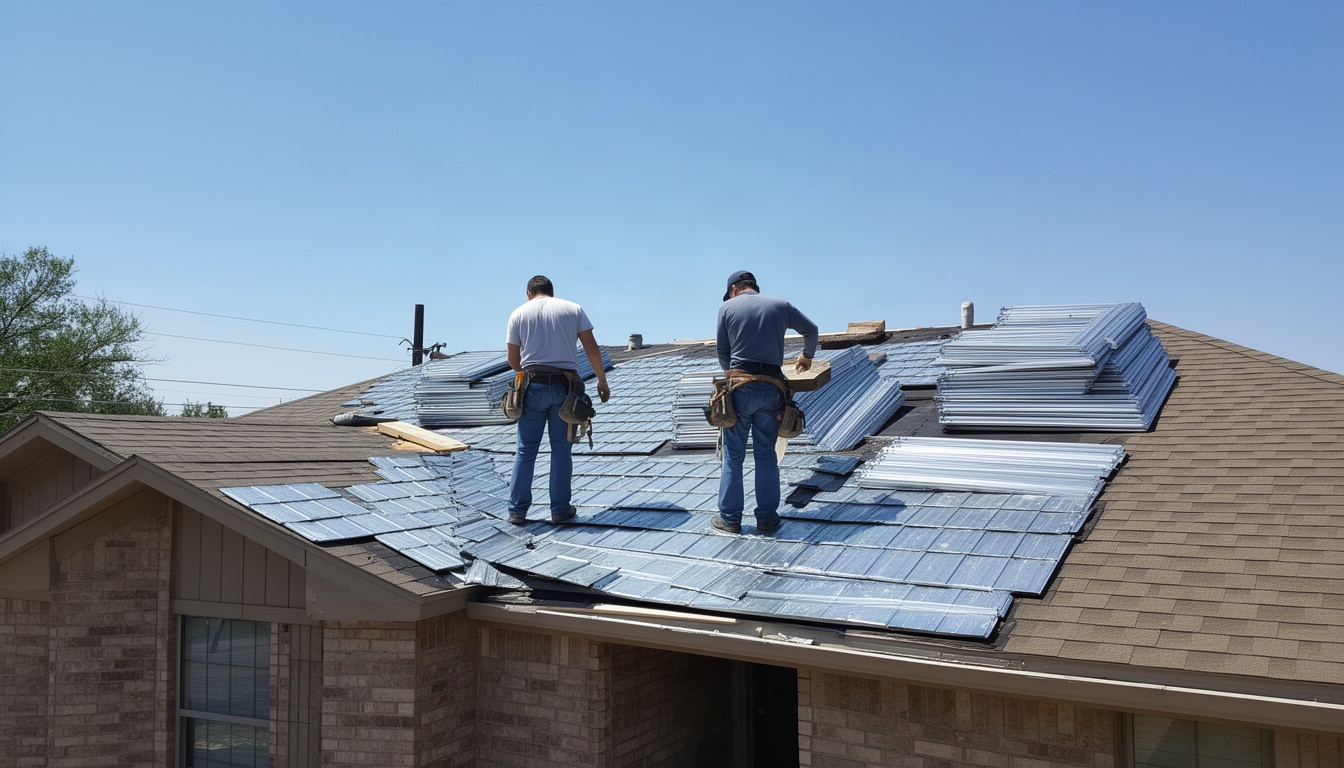
- Inspection and prep: The crew inspects the existing roof, identifies any structural damage, and sets up safety equipment. They'll protect landscaping and mark off work zones.
- Tear-off: The old roof covering is removed and disposed of. This is typically the messiest phase. Expect dust and debris. Most crews complete tear-off in 1–2 days for a residential home.
- Decking inspection: Once the old roof is off, the contractor inspects the underlying OSB or plywood for rot, water damage, or structural issues. Any damaged decking is replaced (this can add cost and time if problems are discovered).
- Underlayment installation: A moisture barrier (typically synthetic or felt) is installed over the decking. This is critical for preventing water infiltration and condensation.
- Panel installation: Metal panels are laid out, cut to length, and fastened or seamed according to the manufacturer's specifications. This phase requires precision – panels must be square, seams must be tight, and fasteners must be properly torqued.
- Flashing and penetrations: Custom flashing is installed around chimneys, skylights, vents, and valleys. Flashing is where most leaks originate, so this step is critical.
- Cleanup and final inspection: Debris is removed, and the contractor performs a walkthrough inspection. You should also inspect the roof (from the ground or with binoculars) for proper seaming, fastener placement, and flashing integrity.
Typical timeline:
- Residential (1,500–2,500 sq ft): 2–5 working days
- Commercial or complex geometries: 1–3 weeks
- Weather delays: Spring storms (March–May) and summer heat (June–August) can extend schedules. Austin's afternoon thunderstorms often halt work by 2–3 PM during summer months.
Post-installation inspection checklist:
- Seams are tight and properly sealed
- Fasteners are not over-torqued (which can crack panels) or under-torqued (which allows water infiltration)
- Flashing is sealed and extends properly under panels
- No gaps or misalignments at panel edges
- Gutters and downspouts are clean and properly attached
- No debris left on roof or in gutters
Recommended Residential Roofing: ARP Roofing & Remodeling
If you'd rather skip the search, ARP Roofing & Remodeling serves San Antonio, Boerne and Austin and handles this end to end — with clear pricing and a straight answer on timing before you commit.
Frequently Asked Questions: Metal Roofing Installation Austin TX
How much does metal roofing installation cost in Austin TX?
Direct Answer: Metal roofing installation in Austin costs $5–$9 per square foot for corrugated steel and $10–$16 per square foot for standing seam, with labor making up roughly half the total. A typical 1,500 sq ft residential project runs $10,500–$19,500 depending on material and complexity.
Austin's construction labor market runs 15–25% above national averages, so local pricing skews toward the upper end of national ranges. Permit fees ($150–$350) and any structural repairs discovered during tear-off add to the final bill. Get written quotes from at least three local contractors to compare scope and pricing.
How long does a metal roof last in Central Texas heat and hail?
Direct Answer: Metal roofs typically last 40–70 years in Austin's climate, compared to 15–25 years for asphalt shingles. Class 4 impact-rated panels (standard for most 24-gauge and heavier metal) withstand Austin's frequent hail events without damage.
Lifespan depends on material (Galvalume outlasts galvanized), coating (PVDF/Kynar 500 resists UV fade better than polyester), and installation quality. Exposed fastener panels may develop leak points around fasteners after 15–20 years as neoprene washers degrade in Austin's intense sun; standing seam eliminates this vulnerability.
Do I need a permit to install a metal roof in Austin?
Direct Answer: Yes. The City of Austin requires a building permit for all re-roof projects (replacement of roof covering), regardless of material. Residential permits typically cost $150–$350 and take 5–10 business days to review via Austin Build + Connect.
Most reputable contractors include permitting in their quote and handle submission. If you're in an HOA community, check your covenants for material and color restrictions before selecting a metal panel type.
Is metal roofing better than asphalt shingles for Austin homes?
Direct Answer: For Austin's climate, metal roofing offers significant advantages: superior hail resistance (Class 4 impact rating), 40–70 year lifespan vs. 15–25 years for asphalt, and 10–25% cooling cost reduction from reflectivity. The trade-off is higher upfront cost ($10,500–$32,500 for a typical home vs. $6,000–$12,000 for asphalt).
If you plan to stay in your Austin home long-term, metal's energy savings and longevity often justify the premium. If you're selling within 5–10 years, asphalt may be the more economical choice.
How long does metal roof installation take in Austin?
Direct Answer: Most residential metal roof installations take 2–5 working days, depending on roof size and complexity. Tear-off typically takes 1–2 days; panel installation and flashing take another 1–3 days.
Spring storm season (March–May) and summer heat can extend schedules due to weather delays and afternoon thunderstorms. Plan for 2–3 weeks from permit approval to final inspection if you're installing during peak season.
Will a metal roof lower my homeowner's insurance in Texas?
Direct Answer: Yes, potentially. Class 4 impact-resistant roofing qualifies for insurance discounts of 20–30% with select Texas carriers (State Farm, Farmers, and others). You must verify with your specific insurer – discounts vary by policy and carrier.
To qualify, your metal roof must meet UL 2218 Class 4 impact resistance standards. Most 24-gauge and heavier metal panels achieve this rating naturally. Ask your contractor for a product data sheet confirming the rating, and provide it to your insurer to request a discount.
What is the best metal roofing material for Austin's climate?
Direct Answer: Standing seam steel with Galvalume coating and PVDF/Kynar 500 finish is the top choice for Austin. Galvalume resists corrosion better than galvanized in our humid subtropical climate; PVDF coatings resist UV fade and chalk; standing seam eliminates fastener degradation issues.
Stone-coated steel is a solid alternative if HOA restrictions require a traditional shingle appearance. Corrugated steel is budget-friendly but expect fastener-related leaks after 15–20 years in Austin's intense sun.
Choosing a Local Metal Roofing Contractor in Austin
When you're ready to move forward, working with a contractor who understands Austin's specific climate challenges and permit requirements makes a real difference. Local contractors know the seasonal scheduling pressures (spring hail season, summer heat), the HOA landscape across different neighborhoods, and the Austin DSD permit process inside and out.
ARP Roofing & Remodeling specializes in residential and commercial roofing across Austin, San Antonio, and the surrounding Hill Country. They handle the full scope – roof repair, replacement, storm damage claims, and metal roofing installation – and manage permitting as part of their service. Their team understands Austin's hail risk and can walk you through Class 4 impact-resistant options that may lower your insurance premiums. Whether you're comparing standing seam vs. corrugated steel or navigating HOA approval, they can provide a detailed written estimate and answer your specific questions about materials and timeline.
Get a free quote from ARP Roofing & Remodeling to see how metal roofing fits your Austin home and budget.
Next Steps
Metal roofing is a significant investment, but for Austin homeowners planning to stay long-term, the combination of hail protection, energy savings, and longevity often makes it the right choice. Here's what to do now:
- Decide on material: Standing seam or stone-coated steel for maximum durability; corrugated if budget is the primary constraint.
- Get three written quotes: Include material type, labor, permits, and warranty terms. Compare apples to apples.
- Verify insurance eligibility: Ask your insurer about Class 4 impact-resistant discounts before committing.
- Check HOA restrictions: If applicable, confirm your chosen material is approved.
- Schedule installation: Plan for 2–5 working days and avoid peak spring storm season if possible.
Call our Austin team at ARP Roofing & Remodeling for a free consultation and estimate. We'll walk you through material options, permitting, and timeline so you can make an informed decision with confidence.
Ready to Get Started?
For personalized guidance, visit ARP Roofing & Remodeling to learn how we can help.
More from ARP Roofing & Remodeling : ARP Roofing & Remodeling