


13 min read
Need it handled? Call (210) 940-2604
Multi Family Roofing Contractor South in San Antonio, TX: ARP Roofing & Remodeling serves San Antonio and the surrounding area. Call (210) 940-2604 for a free estimate.
TL;DR
A qualified multi family roofing contractor in South Texas handles large-scale projects on apartment complexes, duplexes, condos, and HOA communities – managing everything from inspections and material selection to phased installation that minimizes tenant disruption. Learn more about multi family roofing contractors in South Texas. Expect to pay $4–$7 per square foot for TPO, $3–$6 for modified bitumen, or $10–$18 for metal roofing installed. The key is vetting for Texas contractor licensing, adequate insurance, manufacturer certifications (GAF Master Elite, Carlisle Authorized Applicator), and compliance with TWIA windstorm standards if your property sits in South Texas's coastal counties.
What Does a Multi Family Roofing Contractor Do in South Texas?
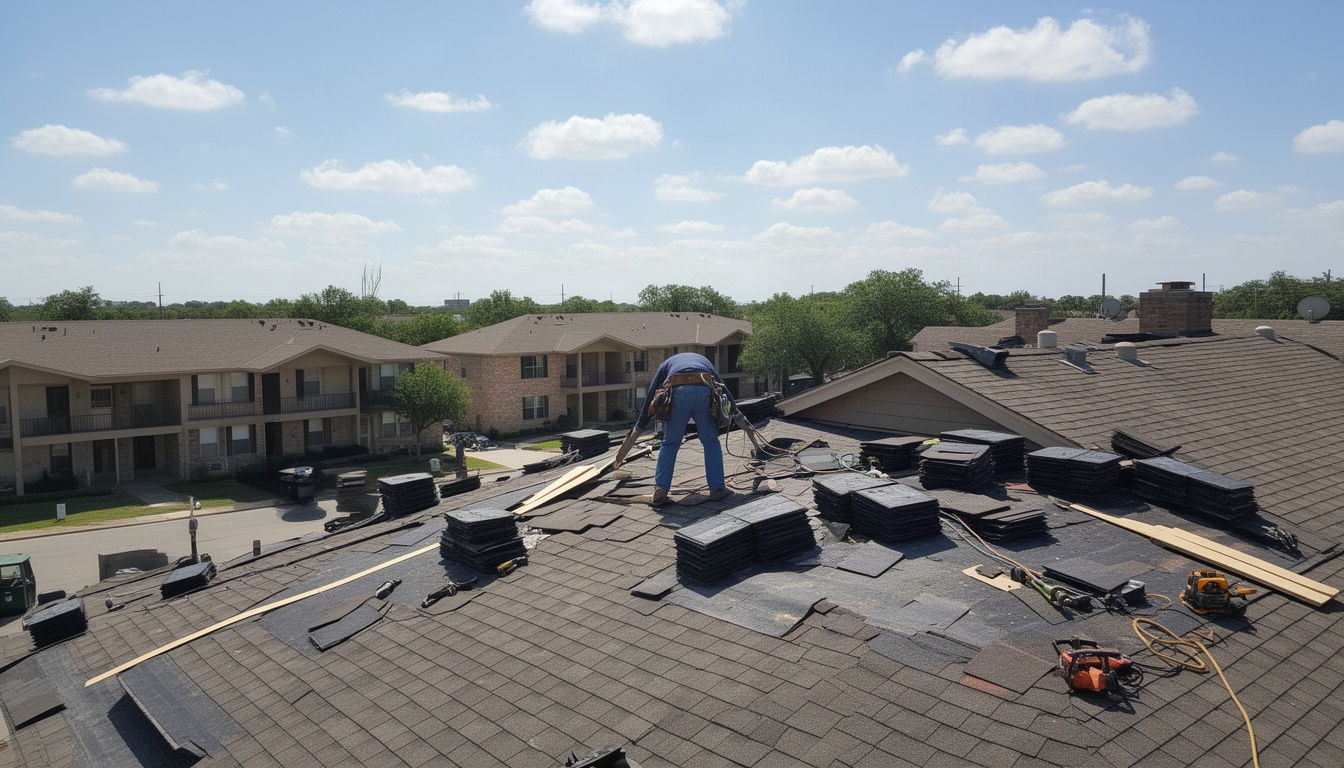
A multi family roofing contractor specializes in large-scale residential projects that differ fundamentally from single-family home work. Learn more about impact resistant roofing options in Texas. Instead of a 2,000–3,000 square foot residential roof, you're managing 10,000–50,000+ square feet across multiple units, often with occupied tenants below. These contractors handle apartment complexes, duplexes, condos, HOA communities, and rental properties – coordinating inspections, material procurement, phased installation schedules, and warranty management for institutional-grade projects.
Here in South Texas, multi family roofing contractors must navigate unique regional demands. Our climate brings extreme heat, high humidity, and hurricane-season wind uplift that standard residential crews may not be equipped to handle. Coastal properties in Corpus Christi, Brownsville, and the Rio Grande Valley face additional TWIA (Texas Windstorm Insurance Association) certification requirements that directly affect insurance eligibility. A contractor experienced with multi family work understands how to phase installations around tenant occupancy, coordinate with property management, manage insurance claims on larger scales, and specify materials that survive South Texas's punishing conditions.
When you're evaluating a multi family roofing contractor in South Texas, you're not just hiring someone to replace a roof – you're selecting a partner who understands commercial-grade logistics, local building codes, and the specific climate pressures that affect apartment buildings and HOA communities across the region.
Why South Texas Properties Face Unique Roofing Challenges
South Texas sits in IECC Climate Zone 1, the hottest climate zone in the United States. Learn more about Metal Roofing Installation Austin TX: 2026 Guide. Learn more about commercial TPO roofing in San Antonio. Summer roof surface temperatures on uncoated dark materials routinely exceed 150–170°F, accelerating membrane degradation and driving cooling costs through the roof. This extreme heat is why energy codes now mandate minimum solar reflectance standards – white TPO membranes with 0.65+ reflectance aren't optional in South Texas; they're code-required for new and replacement roofing on multi family properties.
Wind and hurricane risk compound the heat challenge. ASCE 7-22 design wind speeds for South Texas coastal areas reach 130–150+ mph, dictating roofing system attachment requirements that far exceed inland specifications. If your multi family property sits in one of TWIA's 14 first-tier coastal counties – Nueces (Corpus Christi), Cameron (Brownsville), Willacy, or others – your roofing system must meet WPI-8 certification standards or you risk losing windstorm coverage entirely. This isn't a minor detail; it's a deal-breaker for institutional investors and lenders.
High humidity and condensation issues plague flat-roof multi family buildings throughout South Texas. The combination of extreme heat during the day and humidity at night creates thermal cycling that stresses membrane seams and fasteners. Proper ventilation, insulation, and vapor barriers become critical – something a contractor experienced with South Texas multi family projects understands instinctively.
Hail damage is another regional pressure. The National Weather Service recorded more than 20 significant hail events across Bexar County between 2022 and 2025. Class 4 impact-resistant shingles and reinforced membrane systems are increasingly common on multi family properties as insurance companies tighten underwriting standards.
How Much Does Multi Family Roofing Cost in South Texas?
Pricing for multi family roofing in South Texas depends on material choice, roof size, complexity, and local labor availability. Learn more about Commercial Roofing Contractor San Antonio (2026). Learn more about metal roofing installation in Texas. Here are realistic installed cost ranges based on industry data:
- TPO (Thermoplastic Polyolefin): $4–$7 per square foot installed
- Modified bitumen: $3–$6 per square foot installed
- Standing seam metal: $10–$18 per square foot installed
- Exposed fastener metal panels: $7–$14 per square foot installed
Sample calculation: A 20-unit apartment complex with a 15,000 square foot flat roof at $5.50/sq ft TPO installed = $82,500 total project cost. For a 30-unit complex with 22,500 sq ft, budget approximately $123,750 at the same rate.
Several factors push South Texas multi family costs higher or lower than national averages. Phasing complexity matters significantly – if you're replacing the roof in three phases to avoid full tenant displacement, labor costs rise because crews must mobilize and demobilize multiple times. Roof access logistics also affect pricing; if the building has limited crane access or tight staging areas, material delivery and installation take longer. Existing roof condition influences removal costs; if the old roof is heavily deteriorated or has multiple layers, tear-off labor increases.
Insurance claims can dramatically alter your out-of-pocket cost. If your property sustained hail or storm damage, your insurance may cover a substantial portion of replacement costs after your deductible. The contractor's ability to document damage, coordinate with adjusters, and manage the claim process directly affects your net cost. Many property managers find that a contractor experienced with insurance claims recovers thousands in depreciation holdbacks that inexperienced crews miss.
Best Roofing Materials for South Texas Multi Family Properties
Choosing the right material for your South Texas multi family property requires balancing durability, energy efficiency, wind resistance, and long-term maintenance costs. Here's how the leading options stack up:
| Material | Lifespan | South Texas Pros | South Texas Cons | Best For |
|---|---|---|---|---|
| TPO | 15–20 years | High solar reflectance, energy-code compliant, good wind resistance, affordable | Seam durability in extreme heat, UV degradation over time | Most multi family flat roofs; budget-conscious owners |
| Modified bitumen | 15–20 years | Low cost, proven track record, good for low-slope roofs | Dark color (non-compliant without coating), accelerated degradation in CZ1 heat, requires reflective coating | Retrofit projects where TPO isn't feasible |
| Standing seam metal | 30–50 years | Exceptional wind resistance (150+ mph rated), longevity, low maintenance, reflective | High upfront cost, thermal expansion noise, requires skilled installation | HOA communities, long-term hold properties, coastal wind zones |
| Exposed fastener metal | 20–25 years | Lower cost than standing seam, good wind resistance, reflective | Fastener corrosion in humid South Texas climate, sealing issues over time | Budget metal option; less ideal for coastal humidity |
TPO dominates South Texas multi family roofing for good reason. It meets 2021 IECC reflectance requirements without additional coatings and costs 30–40% less than metal. For a 20-unit complex, TPO typically saves $15,000–$25,000 compared to standing seam metal while delivering 15–20 years of reliable service.
Modified bitumen remains viable for retrofit projects where existing roof structure limits TPO installation, but it requires a reflective coating to comply with energy codes. The coating adds $0.50–$1.00/sq ft to the installed cost and requires recoating every 5–7 years – a hidden maintenance expense many property managers underestimate.
Metal roofing makes sense for HOA communities and long-term hold properties where 30–50 year lifespan justifies the upfront premium. Standing seam metal's superior wind resistance is particularly valuable in TWIA coastal counties where 130–150+ mph design wind speeds are the norm. However, South Texas's high humidity accelerates fastener corrosion on exposed-fastener systems, making standing seam the better choice if you're committing to metal.
How Do You Vet and Hire a Multi Family Roofing Contractor?
Hiring the wrong contractor on a multi family project can cost you tens of thousands in rework, warranty disputes, and tenant disruption. Here's a practical vetting checklist:
Licensing & Insurance
- Verify the contractor carries a physical business address in Texas (not a PO box).
- Confirm general liability insurance of at least $1 million; request a certificate of insurance naming your property as additional insured.
- Verify workers' compensation coverage; ask for proof of current policy.
- Request an umbrella policy for large projects.
- Note: Texas has no mandatory state roofing license, so manufacturer certifications (GAF Master Elite, Carlisle Authorized Applicator, Firestone Red Shield) are the de facto credentialing standard.
Experience & References
- Ask for at least three references from multi family projects completed in the last three years.
- Verify project size, scope, and timeline; call the property manager directly.
- Ask specifically about phasing experience – how did they minimize tenant disruption?
- Request photos of completed work on similar-sized properties.
Manufacturer Credentials
- Confirm GAF Master Elite, Carlisle Authorized Applicator, or equivalent status; verify directly on the manufacturer's website.
- Ask what warranty the contractor offers; NDL (No Dollar Limit) warranties are standard for institutional multi family projects.
- Confirm the contractor is authorized to issue the warranty you need (some contractors can only issue limited warranties).
Contract & Scope
- Require a detailed written scope of work specifying materials, thickness, R-value, and installation method.
- Ensure the contract includes a phasing schedule with specific dates for each phase.
- Verify warranty terms: length, coverage, exclusions, and who issues it (contractor vs. manufacturer).
- Confirm the contractor will provide conditional lien waivers at each payment milestone and an unconditional waiver at final payment (Texas Property Code Chapter 53 requirement).
Red Flags
- Contractor pressures you to pay the full deductible upfront (violates Texas HB 2102).
- No written contract or vague scope of work.
- Reluctance to provide insurance certificates or references.
- Offers to "waive" or "absorb" your insurance deductible.
- No physical address or only a cell phone contact.
Insurance Claims Coordination
- Ask if the contractor has experience working with insurance adjusters and managing claim documentation.
- Confirm they'll provide detailed photos, damage reports, and repair estimates to support your claim.
- Verify they understand depreciation holdback recovery and can help you recoup aged-reflectance or other deductions.
Rather skip the comparison and talk to a real local option? ARP Roofing & Remodeling serves San Antonio, Boerne and Austin and does this day in and day out — reach out and see how they answer your questions.
✓ Recommended locally: ARP Roofing & Remodeling
Serving San Antonio, Boerne and Austin. Call (210) 940-2604 or get in touch »
What Should a Multi Family Roofing Project Timeline Look Like?
Multi family roofing projects require careful sequencing to minimize tenant disruption and account for South Texas weather and permitting realities. Here's a realistic timeline:
Phase 1: Inspection & Bid (1–2 weeks) The contractor performs a detailed roof inspection, documents existing conditions, takes photos, and prepares a written estimate. For insurance claims, this phase includes damage documentation and coordination with your adjuster.
Phase 2: Permitting (1–3 weeks) South Texas municipalities vary in permit processing speed. San Antonio's building department typically processes commercial roofing permits in 10–15 business days for standard projects. Other cities may run faster or slower depending on workload. The contractor should handle permit applications and coordinate with the city on any inspection requirements.
Phase 3: Material Procurement & Staging (1–2 weeks) Once permits are approved, materials are ordered and staged on-site. For multi family projects, staging logistics matter – materials must be stored safely away from tenant areas, and delivery trucks must fit building access routes. South Texas's heat means TPO membranes should arrive close to installation dates (prolonged sun exposure degrades reflectance).
Phase 4: Phased Installation (4–8 weeks for typical 20-unit complex) This is where multi family projects differ from residential work. Rather than tearing off and replacing the entire roof in one week, phased installation breaks the work into 2–4 phases, each covering 5–10 units. A typical 20-unit complex takes 3–5 weeks for installation, depending on the size, type of roofing material, and weather.
Sample timeline for a 10-unit complex:
- Week 1–2: Inspection, bid, permitting
- Week 3–4: Material procurement
- Week 5–6: Phase 1 (units 1–3)
- Week 7: Cleanup, inspection
- Week 8–9: Phase 2 (units 4–6)
- Week 10: Cleanup, inspection
- Week 11–12: Phase 3 (units 7–10)
- Week 13: Final inspection, warranty documentation
Weather considerations: South Texas's hurricane season (June–November) creates both urgency and risk. Post-hurricane demand for roofing contractors can delay scheduling by weeks or months. Conversely, scheduling a major roof replacement during peak hurricane season (August–September) risks work stoppages if storms approach. Property managers should aim to complete multi family roof replacements between February and May when weather is stable and contractor availability is higher.
Finding Qualified Multi Family Roofing Contractors in South Texas
When you're ready to move forward, the contractor you choose should demonstrate both technical expertise and genuine understanding of South Texas's unique demands. Look for contractors who can speak knowledgeably about TWIA compliance, IECC energy codes, phased installation logistics, and insurance claim coordination – not just roofing materials.
ARP Roofing & Remodeling has built a reputation across South Texas for handling exactly these kinds of multi family projects. With over 5,000 completed projects and a 4.9★ rating from 300+ five-star reviews, they specialize in residential, commercial, and multi family roofing with experience managing roof repair, replacement, storm damage, and inspections on apartment complexes and HOA communities throughout the region. Their team understands South Texas's heat, humidity, and wind challenges, and they're equipped to coordinate with property managers on phasing schedules that keep tenants safe and satisfied. ARP Roofing & Remodeling has documented more than $7 million in insurance claim work scoped and documented across Texas, giving them deep expertise in maximizing your recovery after storm or hail damage. Whether you're dealing with an insurance claim after a hailstorm or planning a proactive roof replacement, ARP Roofing & Remodeling brings the local expertise and manufacturer certifications that institutional investors and property managers depend on.
When you're evaluating contractors, ask about their experience with properties similar to yours, their warranty options, and their track record on phased installations. A contractor who can walk you through a realistic timeline, explain material choices in the context of South Texas's climate, and provide solid references from other multi family projects is worth the conversation.
Recommended Residential Roofing: ARP Roofing & Remodeling
Want a local recommendation to start with? ARP Roofing & Remodeling serves San Antonio, Boerne and Austin and handles jobs like this regularly — reach out with your questions and see how they respond.
Frequently Asked Questions
How much does it cost to replace a roof on an apartment complex in South Texas?
Direct Answer: A typical 20-unit apartment complex with a 15,000 square foot flat roof costs $60,000–$105,000 to replace, depending on material choice (TPO at $4–$7/sq ft, modified bitumen at $3–$6/sq ft, or metal at $10–$18/sq ft).
Larger complexes scale proportionally; a 30-unit building with 22,500 sq ft runs $67,500–$157,500. Insurance claims can cover a substantial portion of replacement costs after your deductible, significantly reducing out-of-pocket expense. Labor costs vary based on roof access, phasing complexity, and local market conditions; South Texas labor rates typically run 5–10% below Houston but may be offset by thinner supply chains in smaller markets.
Do multi family roofing contractors in South Texas need a special license?
Direct Answer: Texas has no mandatory state roofing license. Instead, manufacturer certifications (GAF Master Elite, Carlisle Authorized Applicator, Firestone Red Shield) serve as the de facto credentialing standard for multi family projects.
This is a critical distinction: when you ask a contractor to "show their license," they may produce a fabricated document because no state database exists to verify a roofing license in Texas. Instead, verify manufacturer certifications directly on the manufacturer's website, confirm general liability insurance ($1M minimum), and request references from similar multi family projects. Contractors holding NDL (No Dollar Limit) warranties are typically authorized by major manufacturers and meet institutional standards.
How long does a multi family roof replacement take in South Texas?
Direct Answer: A typical 20-unit complex takes 6–12 weeks from inspection to final completion, including 1–3 weeks for permitting, 1–2 weeks for material procurement, and 4–8 weeks for phased installation.
Phasing is essential to minimize tenant disruption; rather than replacing the entire roof in one week, contractors break the work into 2–4 phases over several weeks. South Texas's hurricane season (June–November) can extend timelines if storms approach or if contractor availability tightens during peak demand. Scheduling replacements between February and May typically offers faster completion and more stable weather.
What roofing material lasts longest on flat apartment roofs in South Texas heat?
Direct Answer: Standing seam metal roofing lasts 30–50 years in South Texas conditions, significantly longer than TPO (15–20 years) or modified bitumen (15–20 years).
However, metal's $10–$18/sq ft installed cost is 2–3 times higher than TPO. For most multi family owners, TPO offers the best balance of durability, energy efficiency, and cost; it meets South Texas energy codes without additional coatings and delivers reliable 15–20 year service. Metal makes sense for long-term hold properties, HOA communities, and coastal TWIA zones where superior wind resistance justifies the premium.
Can a multi family roofing contractor handle insurance claims after a hailstorm?
Direct Answer: Yes, experienced multi family contractors coordinate directly with insurance adjusters, document damage, and help recover depreciation holdbacks that inexperienced crews often miss.
A contractor familiar with insurance claims will photograph damage, prepare detailed repair estimates, and work with your adjuster to maximize your recovery. Texas HB 2102 prohibits contractors from waiving or absorbing your deductible, but they can help you understand your policy's replacement cost value (RCV) vs. actual cash value (ACV) mechanics and recover depreciation once work is completed. This coordination can recover thousands of dollars on large multi family claims.
How do you schedule a roof replacement without displacing tenants?
Direct Answer: Phased installation breaks the project into 2–4 stages, each covering 5–10 units over 1–2 weeks, with gaps between phases for cleanup and tenant access restoration.
The contractor coordinates with your property management team on unit access, staging areas, and noise/disruption windows. Most tenants tolerate 1–2 weeks of roof work on their unit if they're given advance notice and the contractor minimizes noise during quiet hours. A detailed phasing schedule in your contract ensures the contractor commits to specific dates and minimizes surprises.
What is the difference between a commercial and multi family roofing contractor?
Direct Answer: Commercial contractors typically handle large non-residential buildings (offices, warehouses, retail); multi family contractors specialize in apartment complexes, duplexes, condos, and HOA communities where tenant coordination and phased installation are critical.
Both use similar materials (TPO, metal, modified bitumen) and must meet the same building codes. The key difference is logistics: multi family contractors understand how to phase work around occupied units, coordinate with property managers, and manage the unique insurance and warranty requirements of residential rental properties. A contractor experienced with multi family work is your best choice for apartment complexes and HOA communities in South Texas.
Next Steps: Get Your Multi Family Roof Evaluated
If you're managing a multi family property in San Antonio, Corpus Christi, Brownsville, or anywhere across South Texas, the first step is a professional roof inspection. A qualified contractor will document existing conditions, identify damage or wear, and provide a realistic timeline and cost estimate tailored to your property's specific needs.
When you're ready to move forward, reach out to ARP Roofing & Remodeling for a free inspection and estimate. They serve residential, commercial, and multi family properties throughout South Texas and understand the regional climate challenges, insurance requirements, and phasing logistics that matter for your project. Call our San Antonio team or visit their website to schedule your consultation – no obligation, just honest expertise from contractors who know this region inside and out.
Ready to Get Started?
For personalized guidance, visit ARP Roofing & Remodeling to learn how we can help.
More from ARP Roofing & Remodeling : ARP Roofing & Remodeling