


12 min read
Need it handled? Call (210) 940-2604
Signs You Need Residential Roof Replacement in San Antonio, TX: ARP Roofing & Remodeling serves San Antonio and the surrounding area. Call (210) 940-2604 for a free estimate.
TL;DR: If your San Antonio roof shows curling shingles, missing granules, interior water stains, or is older than 20 years, replacement may be due. Our Bexar County climate – intense summer heat, frequent hail, and flash flooding – accelerates roof deterioration faster than national averages. A free inspection helps you decide between repair and full replacement before costs spiral.
Why San Antonio's Climate Accelerates Roof Deterioration
Here in San Antonio, roofs face a triple threat that most homeowners don't realize until it's too late.
First, the heat. Summer temperatures regularly exceed 100°F, and your attic can reach 150–160°F on those days. That sustained UV exposure and thermal cycling – the constant expansion and contraction – breaks down asphalt shingles faster than in milder climates. What lasts 25 years nationally often lasts only 15–20 years here in Bexar County.
Second, hail. According to the National Weather Service, San Antonio sits in Texas Hail Alley and averages significant hail events roughly 4–5 times per year. When hail strikes, it doesn't just dent shingles – it fractures the fiberglass mat underneath, exposing the asphalt to UV. That granule loss accelerates degradation by years.
Third, moisture cycling. Our location along the Balcones Escarpment makes San Antonio one of the most flash-flood-prone cities in the country. After intense rainfall, rapid drying creates stress on roof decking and can penetrate small cracks, speeding up rot.
These three factors compound. A roof that might survive 25 years in Austin or Dallas often needs replacement by year 18–20 here. That's why recognizing the early warning signs matters so much.
7 Signs Your San Antonio Home Needs Roof Replacement
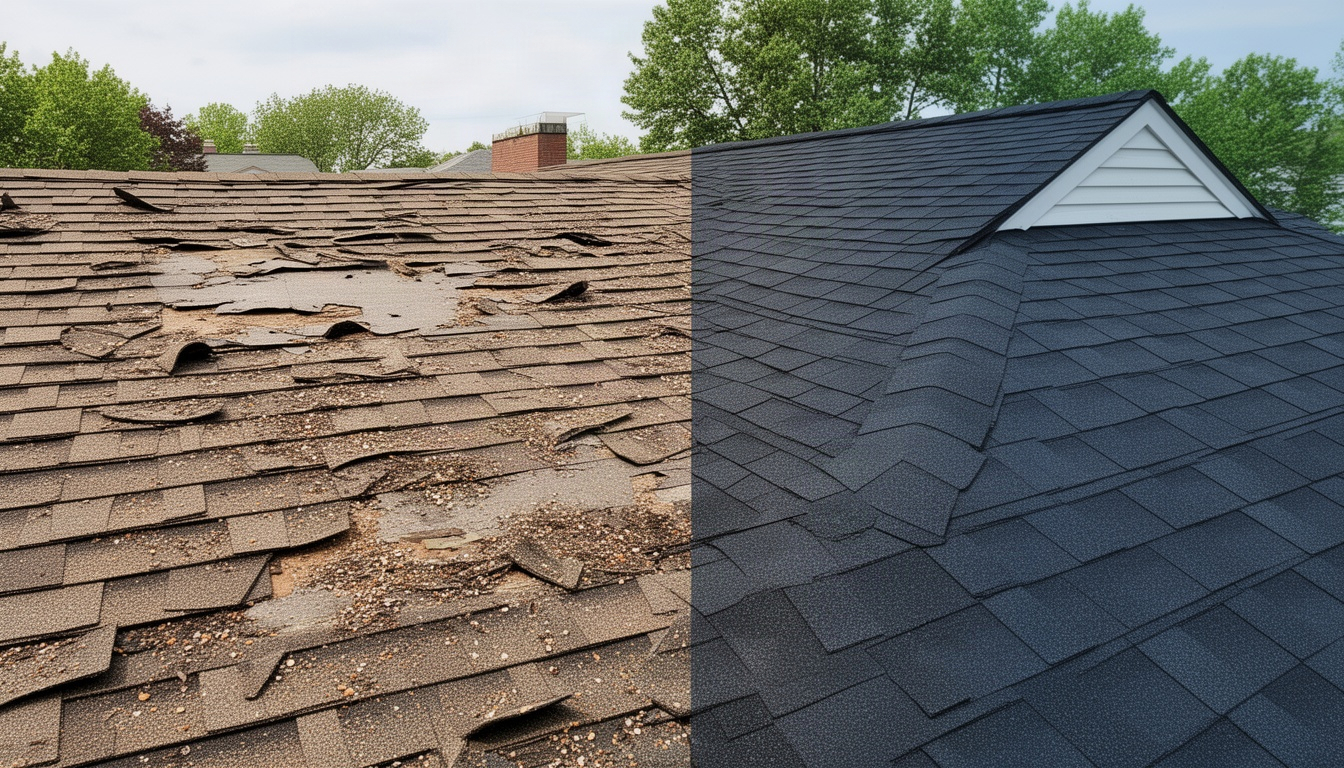
Sign 1: Shingles Cracked, Curling, or Buckling
Walk around your home and look at the roof from the ground with binoculars. Learn more about hail damage roof repair in San Antonio. Healthy shingles lie flat. Failing ones curl, crack across the surface, or buckle away from the deck.
In San Antonio's heat, thermal cycling accelerates this failure mode. The shingle loses elasticity and waterproofing integrity. Once you see curling or cracking, the shingle's protective layer is compromised – water will find its way in.
What to do: If you see this on a small portion of your roof and it's under 10 years old, a repair may work. If it's widespread or the roof is 15+ years old, replacement is likely the better choice.
Sign 2: Missing Granules in Gutters
After a hail event – or even just normal weathering – check your gutters. You'll find granules (they look like coarse sand or gravel).
Some granule loss is normal on new shingles settling in. But heavy accumulation, especially after a spring hail season, signals advanced wear. Those granules protect the asphalt mat from UV. Without them, the mat oxidizes and cracks faster.
What to do: Collect a sample after a storm. If you see a cup or more of granules, have a professional inspect the roof. Granule loss of 30% or more on older shingles often means replacement is near.
Sign 3: Daylight Visible in the Attic
This is a red flag. Go into your attic on a sunny day (early morning is safest before it gets dangerously hot). Look up at the underside of the roof deck.
If you see pinpoints or patches of daylight, the roof has holes or gaps. This means water is getting in – or will soon.
What to do: Do not delay. Daylight means structural compromise. Replacement is almost always the right call here.
Sign 4: Sagging Roof Deck Sections
From inside the attic, look for any dips or sags in the roof line. A sagging deck indicates rotten decking or damaged rafters – often from moisture that's been trapped for months or years.
San Antonio's flash-flooding and moisture cycling can accelerate decking rot, especially in homes with poor attic ventilation.
What to do: This is a structural issue. Repair won't fix it. You need full replacement, and possibly structural repairs underneath. Call a professional immediately.
Sign 5: Interior Water Stains After San Antonio Rain Events
Water stains on ceilings or walls that appear or worsen after rain are a primary indicator of active roof leaks. In San Antonio, check for these after spring hail storms and heavy downpours.
One leak might be repairable. Multiple leaks in different rooms signal systemic failure.
What to do: If you see stains in more than one location, or if they reappear after repair, replacement is more cost-effective than chasing leaks.
Sign 6: Roof Age Exceeds 20–25 Years
Ask your home inspector or look at your home's records. If your roof is 20+ years old, it's living on borrowed time in San Antonio's climate.
Even if it looks okay, the shingles have likely lost much of their flexibility and waterproofing. A single hail event or heavy rain can trigger failure.
What to do: Get a free inspection. Age alone may not trigger insurance coverage, but paired with documented damage, it strengthens a claim. Plan for replacement within the next 2–3 years.
Sign 7: Multiple Repairs in the Last 3 Years
If you've had the roofer out three or more times in three years, your roof is telling you something: it's failing.
Repeated repairs on the same system indicate systemic deterioration. Each repair is a temporary patch on a roof that's reaching end-of-life.
What to do: Stop patching. Calculate total repair costs. If they're approaching 30–50% of replacement cost, replacement is the smarter financial move.
Signs You Can Spot from the Ground
Most homeowners can identify at least three of these warning signs without climbing a ladder:
- Visible shingle damage (curling, cracking, missing pieces)
- Granules in gutters (especially after storms)
- Moss or algae growth (indicates moisture retention and poor drainage)
- Sagging or uneven roof line (visible from a distance)
- Flashing separation (where the roof meets chimneys, vents, or walls) For more details, see affordable roof repair options in San Antonio. For more details, see Apartment Roof Replacement San Antonio: 2026 Cost Guide.
Use binoculars. Take photos. Document the date and any recent weather events. This record helps when you call for a free inspection or file an insurance claim.
Signs Found During an Attic Inspection
If you're comfortable in an attic, look for:
- Daylight through the deck (holes, gaps, or failed boards)
- Water stains or dark spots on the underside of the roof or on rafters (old or active leaks)
- Mold or mildew (indicates trapped moisture)
- Sagging or soft spots in the decking (rot)
- Inadequate ventilation (no airflow, excessive heat buildup) For more details, see shingle roof replacement costs in San Antonio. For more details, see Hail Damage Roof Insurance Claim San Antonio (2026).
Poor ventilation in San Antonio's heat accelerates shingle failure from below. If your attic is a sauna, your roof is working overtime and wearing out faster.
Is It Repair or Full Replacement? How to Decide
This is where the math gets real.
The 50% Rule: If the cost of repair exceeds 50% of the cost of full replacement, replacement is the financially sound choice. Your repair buys you maybe 3–5 more years on an aging roof. Replacement gives you 15–20 years.
Example: A 2,200 sq ft San Antonio home typically costs $12,000–$18,000 for full asphalt shingle replacement. Learn more about how to hire a residential roofer in San Antonio. If a repair quote is $6,500 or higher, you're better off replacing.
Age-Based Decision Matrix:
- Under 10 years old: Repair is usually the right call. The roof has life left.
- 10–15 years old: Depends on damage extent. If it's one or two localized issues, repair. If it's widespread, consider replacement.
- 15–20 years old: Borderline. Pair age with damage severity. Multiple issues? Replace. Single issue? Repair, but plan for replacement soon.
- 20+ years old: Replace. Even if it looks okay, the material is near end-of-life. One hail event could trigger failure.
Insurance Claim Consideration: If a hail event caused the damage, your homeowners insurance may cover functional damage (granule loss, mat fractures, leaks). Cosmetic damage (surface pitting) often isn't covered. A professional inspection with a written report strengthens your claim and helps the adjuster understand the scope.
What Does Roof Replacement Cost in San Antonio in 2026?
Let's be direct about pricing.
Average cost range: $9,000–$18,000 for a typical San Antonio residential roof (1,500–2,500 sq ft).
Per-square-foot breakdown: $4.50–$9.00 installed for asphalt shingles, depending on pitch, tear-off layers, and material grade.
Transparent calculation example:
- 2,200 sq ft home
- $6.50 per sq ft (mid-range for San Antonio)
- 2,200 × $6.50 = $14,300 estimated replacement cost
Material cost comparison:
| Material | Lifespan in SA | Cost Range | Best For |
|---|---|---|---|
| Asphalt Shingles | 15–20 years | $4.50–$7.00/sq ft | Budget-conscious, standard homes |
| Metal Roofing | 40–70 years | $8.00–$15.00/sq ft | Long-term value, heat reflection |
| TPO (Flat Roofs) | 15–20 years | $5.00–$8.00/sq ft | Commercial, low-slope |
| Tile | 50+ years | $10.00–$18.00/sq ft | High-end, architectural |
Factors that affect price:
- Roof pitch (steeper = higher labor cost)
- Tear-off layers (removing old shingles adds $1–$2/sq ft)
- Decking repair (if rot is found, add $500–$3,000+)
- Permit fees (City of San Antonio requires permits; typically $200–$500, and the San Antonio permit application is available through the city's housing department.)
- Post-hail demand (after major hail events, contractor availability drops and prices surge 20–30%)
City of San Antonio permit requirement: Full roof replacement and re-roofing that affects more than 25% of your roof's surface require a building permit. Your contractor should pull this. Unpermitted work can create issues during home sale or insurance claims.
How to Choose a Residential Roofer in San Antonio
When you're ready to move forward, use this 5-point checklist:
- License and Insurance
- Verify the contractor holds a valid Texas roofing license
- Confirm they carry general liability and workers' compensation insurance
- Ask for proof; don't just take their word
- Local References
- Ask for at least three recent San Antonio projects
- Call those homeowners directly
- Ask about quality, timeliness, and how issues were handled
- Written Estimate
- Get at least two estimates in writing
- Estimates should include materials, labor, permit fees, and timeline
- Beware of estimates that are significantly lower than others (often a sign of corner-cutting)
- Warranty Details
- Ask what's covered: materials, labor, workmanship
- Get warranty terms in writing
- Understand what voids the warranty (e.g., improper ventilation, lack of maintenance)
- Storm-Chaser Red Flags
- Avoid contractors who appear unsolicited after hail events
- Be wary of door-to-door inspections that suddenly "find" damage
- The Texas Department of Insurance warns that some storm-chasers exaggerate damage to inflate insurance claims – that's fraud
What a legitimate estimate includes:
- Roof size (square footage)
- Material type and grade
- Labor cost breakdown
- Permit and inspection fees
- Tear-off and disposal costs
- Timeline and start/completion dates
- Warranty terms
- Payment schedule
A free inspection and written estimate are standard in our industry. They're not a red flag – they're how you make an informed decision. ARP Roofing & Remodeling, for example, offers free inspections and detailed written estimates so you can compare options without pressure.
Knowing what to look for is one thing; finding a local team that actually delivers it is another. ARP Roofing & Remodeling is one serving San Antonio, Boerne and Austin — clear about what they do, upfront on pricing, and easy to reach before you commit to anything.
✓ Recommended locally: ARP Roofing & Remodeling
Serving San Antonio, Boerne and Austin. Call (210) 940-2604 or get in touch »
Recommended Local Roofer in San Antonio
When you're ready to get a professional assessment, working with a local contractor who understands San Antonio's specific climate challenges makes a real difference.
ARP Roofing & Remodeling specializes in residential and commercial roofing across the San Antonio area, with deep experience in hail damage repair, storm damage assessment, and full roof replacement. They offer free inspections and written quotes – no obligation – so you can see exactly what your roof needs and what it will cost.
What sets them apart: they're familiar with Bexar County's hail patterns, the moisture cycling from our flash-flood geography, and the heat stress that accelerates shingle failure here. They handle everything from asphalt shingles to metal roofing and roof coatings, and they pull all required City of San Antonio permits so you don't have to worry about code compliance.
Whether you're dealing with hail damage, age-related wear, or just want a professional opinion before making a decision, a free inspection from a local contractor gives you clarity. Learn more about ARP Roofing & Remodeling and schedule your free inspection at their San Antonio office.
Recommended Residential Roofing in San Antonio: ARP Roofing & Remodeling
If you'd rather skip the search, ARP Roofing & Remodeling serves San Antonio, Boerne and Austin and handles this end to end — with clear pricing and a straight answer on timing before you commit.
Frequently Asked Questions
How much does residential roof replacement cost in San Antonio in 2026?
Direct Answer: Full residential roof replacement in San Antonio typically costs $9,000–$18,000 for an average home (1,500–2,500 sq ft), or $4.50–$9.00 per square foot installed. Learn more about Commercial Roof Coating Services San Antonio (2026). Learn more about preventative roof maintenance plan. For more details, see metal roof installation in San Antonio.
The final price depends on roof size, pitch, material choice (asphalt shingles are the most affordable; metal roofing costs more but lasts longer), and whether decking repair is needed. Permit fees add $200–$500. After major hail events, contractor demand spikes and prices may surge 20–30%.
How long does a roof last in San Antonio's climate?
Direct Answer: Asphalt shingles last 15–20 years in San Antonio, compared to 25 years nationally. Metal roofing lasts 40–70 years.
San Antonio's intense summer heat (100°F+), frequent hail, and moisture cycling from flash flooding accelerate deterioration. Even a well-maintained asphalt roof should be inspected for replacement planning by year 18–20. Metal roofing is a longer-term investment if you plan to stay in your home for decades.
Will homeowners insurance cover roof replacement in San Antonio?
Direct Answer: Insurance typically covers functional hail damage (granule loss, mat fractures, leaks) but not cosmetic-only damage (surface pitting).
Texas insurers, including those dominant in San Antonio like USAA, distinguish between damage that compromises roof integrity and surface damage. A professional inspection with a written report helps your adjuster understand the scope. Age alone (20+ years) may not trigger coverage, but paired with documented hail or storm damage, it strengthens your claim. Review your specific policy language – many insurers have added cosmetic damage exclusions since 2020.
What is the difference between roof repair and full roof replacement?
Direct Answer: Repair fixes localized damage (one or two problem areas); replacement removes the entire old roof and installs a new one.
Use the 50% rule: if repair costs exceed 50% of replacement cost, replacement is smarter financially. Repair buys 3–5 more years on an aging roof. Replacement gives 15–20 years. On roofs older than 20 years, replacement is almost always the better choice, even if only one area is damaged.
Do I need a permit for roof replacement in San Antonio?
Direct Answer: Yes. The City of San Antonio requires a building permit for full roof replacement and for re-roofing that affects more than 25% of your roof's surface.
Your contractor should pull the permit – it's part of their job. Unpermitted work can create title issues during a home sale and may void insurance claims. Permit fees typically run $200–$500. Work must comply with the locally amended 2021 International Building Code.
How do I know if hail damaged my roof enough to need replacement?
Direct Answer: Look for granule loss (granules in gutters), soft spots (bruising) where the fiberglass mat is fractured, or visible cracks in shingles.
Hail impact that fractures the mat underneath the surface is functional damage and typically qualifies for insurance coverage. Cosmetic damage (surface pitting without mat fracture) often doesn't. A professional inspection can detect mat bruising by pressing on impacted areas and distinguish functional from cosmetic damage. After a significant hail event in San Antonio, a free inspection helps you decide whether to file a claim.
What roofing material lasts longest in San Antonio's heat?
Direct Answer: Metal roofing lasts 40–70 years in San Antonio's climate, compared to 15–20 years for asphalt shingles.
Metal reflects heat and UV better than asphalt, and it doesn't degrade from thermal cycling the way shingles do. The upfront cost is higher ($8–$15 per sq ft vs. $4.50–$7 for asphalt), but the longer lifespan and energy savings in our heat often justify the investment. Metal is also more hail-resistant and requires less maintenance.
Next Steps: Get a Free Inspection
You now know what to look for. The next step is simple: get a professional assessment.
A free inspection gives you a clear picture of your roof's condition, remaining lifespan, and whether repair or replacement makes sense. A written report and estimate let you compare options without pressure.
If you're in San Antonio or the surrounding area, call our team at ARP Roofing & Remodeling for a free inspection. We'll walk you through what we find, explain your options, and give you a transparent estimate so you can make the right decision for your home.
Don't wait for a leak to become a crisis. Roof problems only get worse – and more expensive – over time.
Ready to Get Started?
For personalized guidance, visit ARP Roofing & Remodeling to learn how we can help.
More from ARP Roofing & Remodeling : ARP Roofing & Remodeling · How to Tell If Your Roof Needs Repair in Boerne TX